


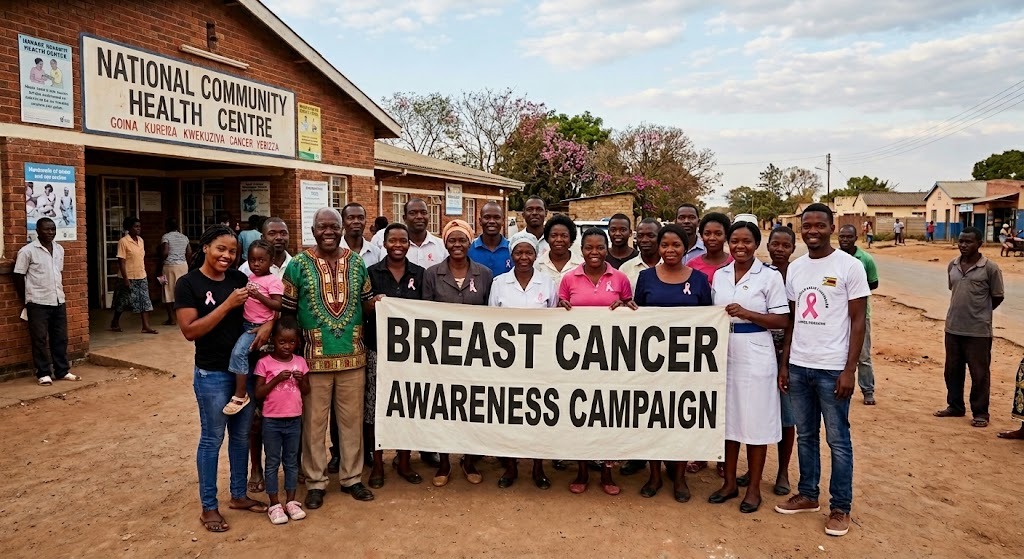
Cancer is a dreadful disease that many of us fear. The agony placed on the patient, the heavy emotional and physical toll on their loved ones, and the exhausting reality of treatments like chemotherapy when available leave a lasting impact on families and communities. This is part of Breast Cancer Awareness Month, which highlights the need for support and early detection.
As October marks Breast Cancer Awareness Month, let us take the opportunity to become more informed.
Additionally, education is a powerful tool in early detection.
It destigmatizes the conversation and supports those who are fighting or have fought this battle.
However, in a less informed society, such an ailment can be attributed to witchcraft or sorcery.
Today, with universal access to information, reality speaks differently.
While the exact causes of breast cancer are multifaceted and not fully understood, research shows multiple factors.
These include genetic factors, hormonal influences, lifestyle choices, and environmental exposures.
Let us not forget to remember that it is the breast of a woman that feeds an infant to grow,the cradle in which early human life is nursed. It is debatably “The Cradle” of human life.Now to think of it being threatened by this enemy called Breast Cancer?The questions arise on what can be done to fight this disease.
According to data from the Zimbabwe National Cancer Registry, breast cancer accounts for about 13% of cancers in Zimbabwe. It is among cancers reported in women.
Imagine a mother who is breastfeeding or pregnant when cancer develops. What does that mean for the child who is to be breastfed?
Breast cancer is also found in men, although it is less common. Some patients have survived, and their stories show that it can be conquered. With early detection, the right medical treatment, a positive mindset, and psychosocial support, breast cancer can be conquered.
How do you know if you have breast cancer?
New Lumps or Thickening: The most common early sign is a new lump or mass in the breast or underarm (armpit). These lumps are often hard, painless (though some can be tender), and have irregular edges, though they can also sometimes feel soft or round.
Changes in Size or Shape: Any unexplained alteration in the overall size, contour, or shape of one or both breasts.
Skin Textures and Changes: Skin changes over the breast—such as dimpling, puckering, or skin that resembles the texture and appearance of an orange peel
Nipple Abnormalities: A newly inverted nipple (pulling inward), unexplained pain in the nipple area, or spontaneous nipple discharge (especially if clear or bloody) other than breast milk.
Skin Irritation or Discoloration: Persistent redness, flaking, scaling, or crusting of the skin on the breast or the darker area surrounding the nipple
Swelling and Pain: Unexplained swelling of all or part of a breast (even if no distinct lump is felt) or persistent localized pain and tenderness.
This does not constitute as a diagnosis or a professional medical opinion,however it does point to some of the early warning signs that one must be screened by a medical professional to be sure.
Types of Screening Methods
- Breast Self-Examination (BSE): Regular monthly self-checks (recommended starting around age 18) to help individuals become familiar with their breast tissue and notice any unusual changes or lumps early.
- Clinical Breast Examination (CBE): Physical examinations performed by trained healthcare professionals during routine clinic or hospital visits.
- Mammography (2D and 3D Tomosynthesis): Low-dose X-ray imaging of the breast tissue. It is the gold standard for early detection, capable of spotting abnormalities or microcalcifications long before they can be felt.
- Breast Ultrasound or MRI: Often used alongside mammography as supplementary diagnostic tools if an abnormality is detected or to assess dense breast tissue.
The above are recommended types of screening for breast cancer.The best of which is to visit a medical facility for proper screening.
Where can one be tested and screened for Breast Cancer:
Parirenyatwa Group of Hospitals & Zimbabwe National Cancer Registry (ZNCR) (Harare) – Serves as a major national tertiary referral and public health hub housing diagnostic departments for cancer evaluations
Cancer Association of Zimbabwe (CAZ) (Headquartered in Bulawayo with offices in Harare) – Runs community-focused awareness and breast care guidance programs, providing crucial education, support groups, and clinical counseling services. MRI & Radiology Centre (88 Josiah Chinamano Avenue, Harare) – Provides dedicated diagnostic imaging services, routine screening, and ultrasounds for breast health assessments
Baines Imaging Group / The Avenues Clinic (Harare) – Offers advanced diagnostic imaging services, including professional mammography and specialized breast screening tools.
By The Chairperson of the Board
S.Chibaya

Leave a Reply